From Conflict to Connection, Part 1


 In the Heat of the Moment:

5 Steps for Helping Kids Resolve Conflict

by Roxy Krawczyk, M.A.Ed.


Welcome to Part 1 of From Conflict to Connection, a three-part series for parents and caregivers on helping children build the skills they need to navigate conflict. Here, we offer a simple step-by-step guide to mediating conflict between children: your go-to plan for the heated moment. In Parts 2 and 3, we’ll explore how to identify and meet the underlying needs that drive children’s behavior and how to nurture emotional ownership and self-regulation, the long-term work that helps children build healthy, happy relationships.


“Moooooom!”


“Daaaaaaad!”


“He took my markers!”


“Nuh-uh! She wasn’t even using them!”


“Yuh-huh! And he called me a baby!”


“Because she wouldn’t share!”


Teachers and parents alike have all been there — called in to mediate children’s quarrels only to find ourselves smack dab in the middle of a tangle of competing stories.


Whether it’s siblings at home or friends on a playdate, you may sometimes feel like you’re working a second job as a referee. 


So, what do you do when kids aren’t getting along? 


First, rest assured that not every disagreement requires your assistance. There can be benefits to letting children navigate minor conflicts among themselves. Depending on their ages, social-emotional development, and relationship dynamic, some squabbles can be resolved independently.


When feelings or bodies have really been hurt, however, it’s time for a grown-up to help. And though it can sometimes feel inconvenient in the moment, investing time in teaching children how to communicate effectively pays off in spades in the long run.


When it’s time to put on your referee hat, here are some simple steps you can follow.


. . .


1. Establish the facts as best you can


Wait until both children have calmed down, offering space and techniques to self-regulate if needed. If emotions are running very high, it can sometimes help to move one or both children out of any ongoing play or work to a calm, neutral location.


When they’re ready, bring both children together and invite each to share their side of the story. If the child who is listening feels compelled to interject, remind them that they will have a chance to share their point of view soon. 


As best you can, try to figure out the general order of events and perspectives of each child. This will help you to better understand what motivated their behavior. (More on this in Part 2!)


2. Help each child communicate their feelings


Once everyone can agree on the basics of what happened, facilitate each child sharing their feelings. If a child is struggling to identify or verbalize their emotions, you can use an age-appropriate feelings wheel to guide them. 


Demonstrate active listening by repeating back what each child has said to confirm that you understand them correctly. Help gently reframe statements into “I” language when needed.* 


  • E.g., if a child says, “You made me angry,” you can repeat back, “When he took your markers, you felt angry.”


After everyone has shared their feelings, invite each child to practice empathy by imagining themselves in the other person’s situation. 


  • E.g., “If someone took your markers, how would you feel?” 


It’s okay if a child responds with “I wouldn’t care!” They may be feeling defensive, or perhaps they really wouldn’t care. This is a good opportunity to explain that sometimes what doesn’t bother one person really bothers another, and it’s important to respect and try to understand other people’s feelings even when you don’t share them.


*Remember that although other people’s actions can trigger feelings inside us, those feelings still belong to us, and only we can choose how we respond to them. We’ll dive further into the practice of emotional ownership in Part 3, but for now, you can use your role as mediator to reinforce this concept through language modeling.


3. Imagine together how things could go differently next time


Once each child feels heard and understood, begin a collaborative discussion about what they could do if this happened again in the future. If they need help getting started, invite each child to describe what they wish the other person had done in this particular situation. Repeat their statements back to them, rephrasing for clarity as needed.


  • E.g., “You wish he had asked you for the markers instead of just taking them,” or “You wish he had told you he felt mad when you didn’t share instead of calling you a name.” 


You can also talk about what each child could do to resolve the feelings in their body, regardless of how the other person might respond to their request (another process we’ll dive further into later in this series). Using a simple visual aid can help children identify and begin to practice these self-regulation skills.


4. Affirm what the children have just accomplished


Reflect back to the children what important work they have done by having this conversation. You can express your genuine feelings and invite them to reflect on and express their own.


  • E.g., “You have done a great job telling each other how you feel and what you want to happen differently next time. I’m happy for you! How are you feeling now?” 


If a child is still feeling upset — that’s okay. Their emotions are valid, and they may take a little time to resolve. Reaffirm that however they are feeling right now is okay, and the work they have done matters.


5. Offer choice whenever possible


Children often don’t have much control over their daily lives. They are typically told where to go, what to do, how to do it, and when. A child’s response to someone’s words or actions may be just as much about reclaiming some control as it is about the other person’s behavior. 


Whenever possible, build choice into a child’s day. Offering children choices helps them feel empowered and capable, which supports their overall development and can also help minimize unnecessary squabbles. In the moment, simply offering one or both children a choice in the situation at hand can sometimes de-escalate the conflict.


  • E.g., “Do you want to use the markers together or take turns?” or “Do you want to color with crayons or colored pencils until the markers are available or do something else while you wait?”


. . .


Remember that self-regulation and effective communication are skills that develop over time. Most children need regular, repeated guidance in their early stages of learning. But the more children practice and internalize these skills, the more they naturally begin to do this work on their own. 


Not only does this mean they’re building essential life skills that will enable them to maintain balanced, healthy relationships with others, but it also means you’ll have to put on your referee hat less often!


Stay tuned for Part 2 of From Conflict to Connection, where we’ll look behind the behavior to explore the underlying needs that motivate children’s actions and how understanding those needs can help them thrive.


Further Resources & Recommended Reading:


  • Center for Nonviolent Communication — The Purpose of Nonviolent Communication. An essential breakdown of self-connection, honest expression, and empathic presence based on the work of Marshall Rosenberg.
  • Glasser Institute for Choice Theory — Quickstart Guide to Choice Theory. A foundational overview explaining the five basic human needs, internal control psychology, and how to build connecting relationship habits.
  • Jackson, L. / Connected Families (2024) — 50 Self-Regulation Activities To Empower Your Child To Calm. A highly practical, sensory-based guide packed with actionable movement, touch, and breathing exercises to help children manage big emotions.
  • Rouse, M. & Martinez, A. / Child Mind Institute (2026) — How Can We Help Kids With Self-Regulation? A clinical yet accessible deep dive into building behavioral frameworks ("scaffolding") to teach children emotional control and self-reflection.


About the Author 

Roxy Krawczyk is an educator, consultant, and writer. She holds an M.A. in Education as well as Montessori teaching certifications in early childhood and adolescence. Roxy loves helping parents learn new tools for the ever-changing job of raising small humans! 

children and parents at drop-off for the first day of school
May 20, 2026
Starting a new school is a big step! Here are a few thoughtful, practical ways to support your child through the transition with confidence and care.
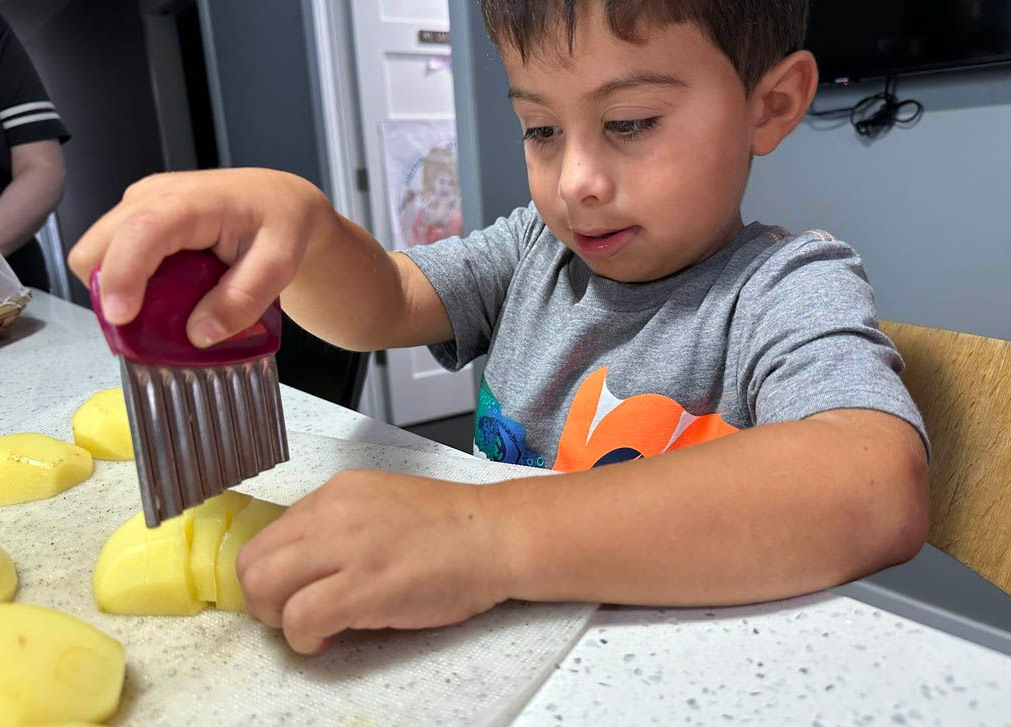
child chops potatoes with a child-sized cutter
By Rita Castro+Cassiano • October 24, 2025
Kids can be responsible! This piece explores how children develop this skill and how parents can encourage personal responsibility at home.
By Roxy Krawczyk, M.A. Ed. • October 31, 2024
The development of self-control begins at birth... However, most children don’t start to show significant gains in their emotional and behavioral control until somewhere between the ages of 3 and 7.
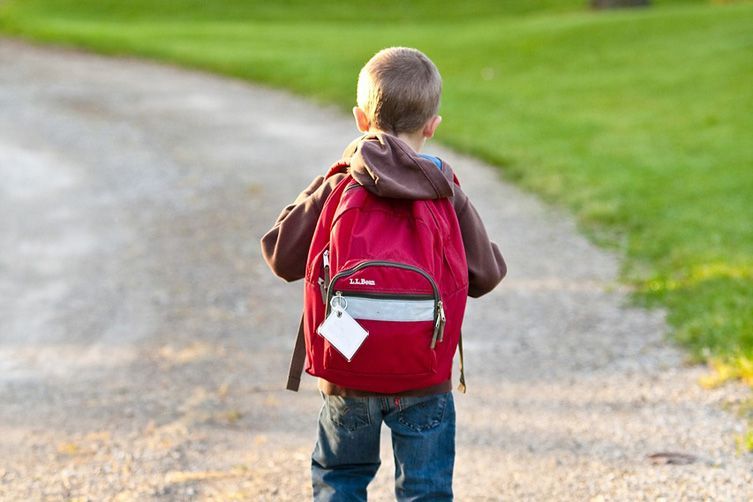
back of a child with red backpack who is walking down a driveway
By Roxy Krawczyk, M.A. Ed. • September 20, 2024
Learn what behavioral changes are normal when your child is transitioning (back) to school, and grab some tips for how to approach this period of adjustment.
child eating lunch
By Rita Castro Cassiano • January 28, 2024
Is your child a picky eater? Learn what leads to picky eating and how to interest your child in a wider variety of foods.
By Rita Castro Cassiano • December 4, 2023
Cultivating Community for Our Children by Roxy Krawczyk, M.A. Ed. Community can be very simply defined as a group of people who live in the same place or who share certain characteristics. But meaningful community — the kind that helps us to live healthier, happier lives — is about much more than just a collection of people. It’s about the connections between them. It’s true that communities develop around shared commonalities like location, values, and goals. What makes them come alive, however, are the relationships that arise from those common threads. These connections are what allow us to shift from surviving to thriving. Participating in community offers human beings a wide array of physical, psychological, and emotional benefits. Living in community gives us the unique advantage of coregulation, a process that balances our nervous systems through the people around us. This reduces our overall stress and leads to improved physical and mental health. Not surprisingly, there is a significant correlation between companionship and happiness! Community also provides us with important physical and emotional support. When difficulties arise, we have people who can offer us help and comfort. This interdependent network creates a feeling of security and increases our resilience. Just as importantly, our involvement in community helps us to develop a sense of personal identity. It provides us with the important feeling of belonging to something larger than ourselves. It fosters the development of our core values, which help to define us as individuals. And it provides opportunities to discover our unique strengths and passions as we share with and learn from others. Our interactions with our community help us learn about ourselves and make conscious decisions about who we want to be. There’s no doubt about it: community is critical to our development and success. And what is one of the very first communities that we belong to? Our school! School communities play a critical role in our early learning: social, emotional, and academic. This is because being and feeling safe is a fundamental human need. Until we feel safe, we cannot focus on much else! From a neurological standpoint, a sense of security allows our brain to better process and retain new information. From a psychological one, feeling safe encourages us to ask questions, take risks, and self-advocate. All of these factors lead to deeper learning. But the benefits don’t stop there. Studies have shown that students in schools with strong community are not just more likely to be academically motivated; they’re also more likely to develop social-emotional competencies, to act ethically and altruistically, and to avoid problematic behaviors like drug use or violence down the road (Schaps, 2003). Being part of a strong, healthy school community enables students to thrive in all aspects of their development. So how do we cultivate a strong school community? First, we establish and emphasize our common values. At A.L.M.A., our core values are compassion, respect, and equity. These values are the foundation on which we build our relationships, and they guide us toward mutual growth and success. Next, we maintain healthy, supportive relationships among students, teachers, and parents/caregivers. We do this by engaging in open, honest, and empathetic communication. We approach issues with a problem-solving mindset. We remember that we are all on the same team working toward shared goals, and we embrace our own vulnerability in the process. Finally, we create opportunities for connection and joy. We come together for social events, for volunteer work, for celebrations. We share. We laugh. We collaborate. We eat! We work to promote helpfulness and inclusiveness while getting to know each other on a deeper level. The more we connect, the stronger our community becomes. A strong school community benefits all of us, but especially our children. They reap the physical benefits of more consistent regulation and reduced stress. They learn more effectively. They develop social-emotional skills and core values that will anchor them throughout their lives. They get key insight into themselves and the beautiful diversity of others. They thrive. References Dixon, E. (2021) The importance of cultivating community . Psychology Today. https://www.psychologytoday.com/us/blog/the-flourishing-family/202108/the-importance-cultivating-community Jefferies, T. (2023) Why community is so important—and how to find yours . Reader’s Digest. https://www.rd.com/article/what-is-community/ Schaps, E. (2003) Creating a school community . ASCD. https://www.ascd.org/el/articles/creating-a-school-community Stein, S. (2023) The Importance of Community . Psychology Today. https://www.psychologytoday.com/us/blog/what-the-wild-things-are/202307/the-importance-of-community About the Author Roxy Krawczyk is a Montessori teacher, education consultant, and freelance writer. She holds Montessori certifications in both early childhood (AMS) and adolescent education (AMI), as well as an M.A. in Education and a B.A. in English. Roxy has ten years of experience teaching in the classroom, and she has spent the last five years consulting for early childhood programs. She loves using her passions for education, research, and writing to help parents gain new insight into the ever-changing job of raising small humans!
By Roxy Krawczyk, M.A. Ed. • November 26, 2023
The Importance of Interdependence by Roxy Krawczyk, M.A. Ed. When it comes to raising young children, we talk a lot about developing independence . And rightly so — the period from birth to age six is an especially critical time for developing physical, mental, and emotional self-reliance. These are the years when children learn to move independently, to care for their own bodily needs, to express and resolve big feelings. But what about interdependence? Though it may not be talked about as much, this social dynamic is critical to developing sustainable health and happiness. So what is interdependence, and why does it matter? Interdependence is a state of being interconnected with others. Living in a state of interdependence means that our individual well-being is influenced by or dependent on the well-being of the people around us. This is in contrast to a state of independence in which we are entirely self-reliant, and our well-being is not influenced by the people around us. Independence is not a bad thing. Generally speaking, our goal is for our children to grow into self-supporting adults. We want our kids to be able to function independently. But we also don’t want them to stop there. We want our children to recognize the importance of interdependence. We want them to build mutual, reciprocal relationships with the people in their lives. Why? Because living and working cooperatively makes us healthier, happier, and more successful. Hundreds of studies have demonstrated that positive interdependence (i.e. cooperation) tends to result in higher achievement and productivity, more positive interpersonal relationships, and greater psychological health (Johnson, 2001). And not only are these benefits important for each individual, they also contribute to the overall health, wellness, and success of our collective. So how do we teach our children the importance of interdependence? And how do we help them build the skills they need to develop healthy, cooperative relationships? We talk about it, we practice it together, and we model it in our own lives. Highlighting moments of interdependence that already exist in your child’s everyday life is an easy place to start. You can chat about things like group projects at school, team sports, or cooperative work at home like chores and meal prep. Help your child to process these experiences by asking them questions: How do they feel about working with other people? What do they enjoy about a particular group activity? Is anything challenging? Follow your child’s cues, validate their feelings, and help them to empathetically problem-solve any issues that may arise. Speaking of chores and meal prep, involving your child in cooperative household activities has a wide range of benefits. It develops practical life skills and self-confidence, both of which are key to future independent success. And just as importantly, it also offers regular opportunities for your child to contribute to the family’s goals through meaningful interdependent work. Encourage your child to ask for help when you notice that they need more support with a task or project. Brainstorm with them about who might be a good resource. You can even help them make the request if needed. Remember to talk about your child’s strengths and talents, too! Highlight moments when they are able to offer support to a friend or family member. Reflect with them on how it feels to be able to help someone else. Use moments when you need assistance with something to verbalize your thinking out loud. This can be as simple as, “Gee, I’m really having a hard time with ____ . I think I’ll ask ____ for some help.” Demonstrate the ways in which you work cooperatively with other people in your own personal and professional life. Modeling is a very powerful tool. Acting with mutual support in our adult relationships — especially the ones our kids see every day, such as those between parents, caregivers, and educators — will naturally lead our children to build similar relationships in their own lives. While developing independence is undoubtedly important for young children, it is never too early to also begin fostering interdependence. Children as young as 1 year old can learn to ask for help, participate in cooperative activities, and absorb relationship modeling. Helping our children to build the skills for both independence and interdependence will help set them up for long-term health, happiness, and success. References Conley, Courtney. “Growing beyond Independence: The Benefits of Interdependence.” Psychology Today, Sussex Publishers, www.psychologytoday.com/us/blog/your-daughter-doesn-t-have-be-miserable/ 202202/growing-beyond-independence-the-benefits. Accessed 16 Oct. 2023. Johnson, D. W., and R. T. Johnson. “Cooperation and Competition, Psychology Of.” International Encyclopedia of the Social & Behavioral Sciences, 2 Nov. 2002, www.sciencedirect.com/ science/article/abs/pii/B0080430767017988?via%3Dihub. Spendelow, Jason. “Interdependence: The Meaning and the Advantages.” The Practical Psychologist, The Practical Psychologist, 29 Aug. 2023, thepracticalpsych.com/blog/interdependent-meaning. About the Author Roxy Krawczyk is a Montessori teacher, educational consultant, and freelance writer. She holds Montessori certifications in both early childhood (AMS) and adolescent (AMI) education, as well as a Master of Arts in Education from St. Catherine’s University. Roxy has ten years of experience teaching in the classroom and has spent the last five years working as an educational consultant for early childhood programs. Prior to her work in education, Roxy earned a B.A. in English from Vassar College and was an editorial assistant in non-fiction book publishing. She loves using her passions for education, research, and writing to help parents gain new insight and tools for the ever-changing job of raising small humans .